

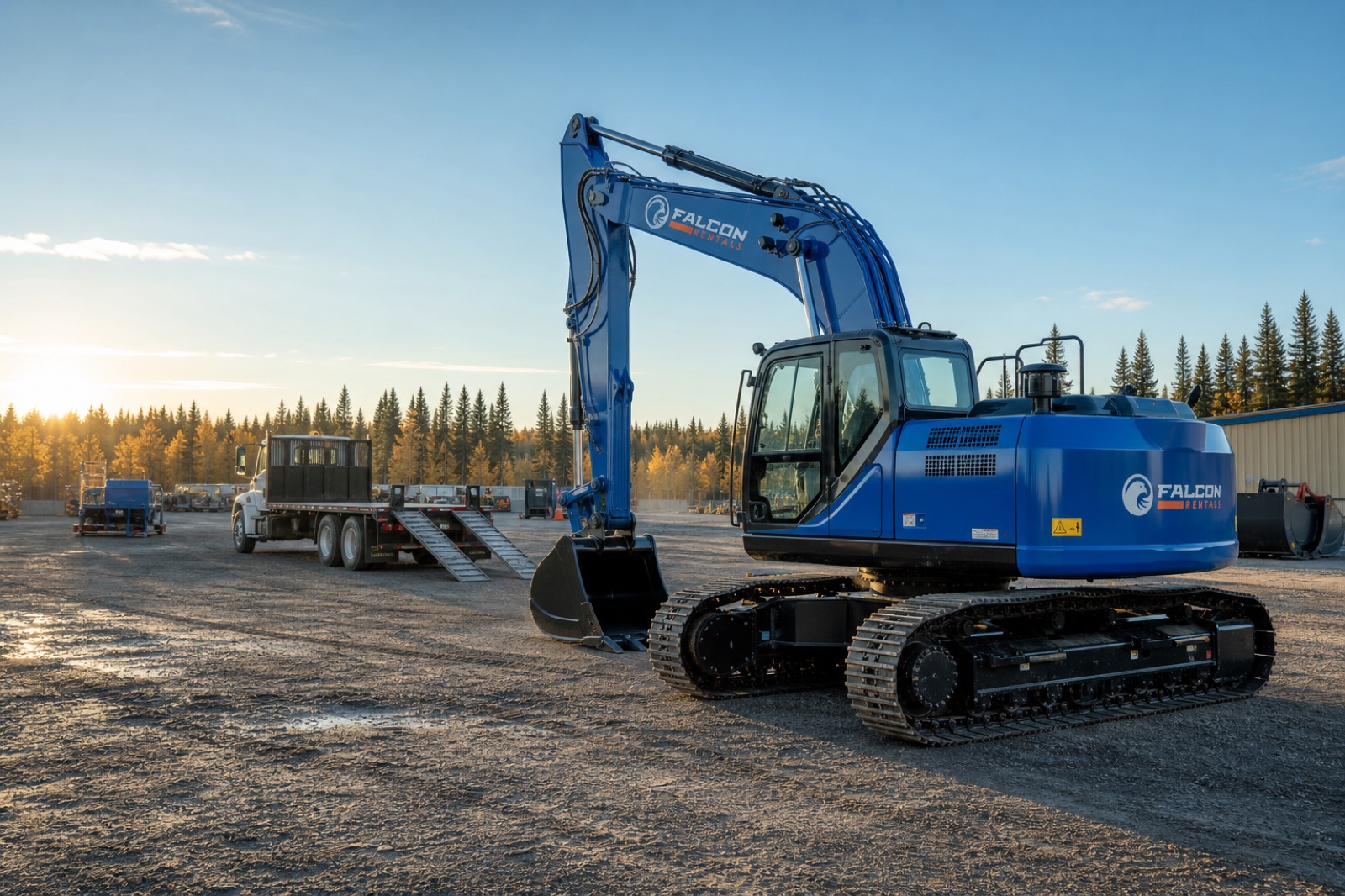
Whitecourt runs on iron. Between forestry operations, oil and gas activity along Highway 43, municipal work, and a steady stream of commercial and residential construction, there's rarely a week when somebody in town isn't looking for a scissor lift, an excavator, or — for six months of the year — a heater big enough to keep a jobsite moving at -30°C.
This guide covers what you can actually rent locally, how delivery works, what changes with the seasons, and how to avoid the mistakes that cost crews time and money.
What you can rent in Whitecourt without waiting on the city
The single biggest advantage of renting locally is time. A machine dispatched from Edmonton is a 2-hour round trip on a good day — and a full day lost when something breaks mid-job. A local yard means same-day iron and a real person to call when plans change.
Falcon Rentals' Whitecourt yard at 3321-37th Ave stocks the categories local jobs actually use:
- Aerial work: rough-terrain scissor lifts, indoor scissor lifts, and boom lifts up to and over 60 feet.
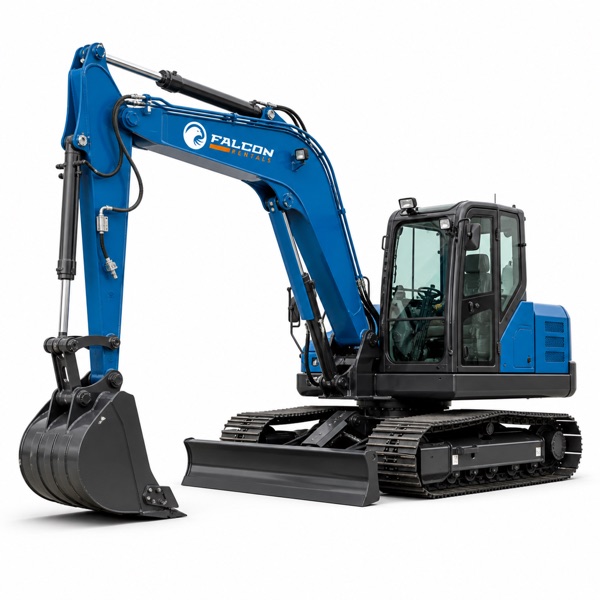
- Earthworks: excavators from mini to 20 ton, tracked and wheeled skid steers, wheel loaders, and attachments.
- Heat: flameless, diesel, electric, NG/LP, and ground-thaw heaters — more on these below, because in Whitecourt heat is its own discipline.
- Power & light: generators from suitcase inverters to towable skids, plus light towers for short days.
- Site setup: office trailers, portable restrooms, fencing, fuel storage, and surveillance towers.
- The small stuff: compaction plates, concrete mixers and saws, pumps, hand tools — hundreds of items you can grab the same morning.
Same-day delivery: how it actually works
Most rental headaches aren't about the machine — they're about logistics. Here's the local reality:
- Reserve before mid-afternoon. Machines booked during yard hours can usually hit a Whitecourt-area site the same day. Book at 4:45 PM and you're realistically first-out the next morning.
- Know your ground. Tell the yard what the machine has to cross — soft lease road, tight residential driveway, frozen muskeg. It changes what trailer (and sometimes what machine) gets sent.
- Have a spot picked. Delivered equipment gets unloaded where the truck can safely put it. Thirty seconds of thought about placement saves an hour of repositioning.
Whitecourt's rental calendar: what to book early
Demand here is seasonal in a way city renters never see:
- September–October: heater fleets start moving. Crews who wait for the first cold snap end up on waiting lists. If your job runs past Thanksgiving, book heat when you book the job.
- November–March: ground-thaw units, flameless heaters (mandatory on many oil and gas sites), and light towers run at capacity. Generators follow every cold snap.
- Breakup (roughly April–May): road bans change what can move and when. Local yards plan loads around ban schedules daily — one more reason local beats long-haul.
- Summer: aerial work, concrete, compaction, and homeowner categories peak. Weekends clear the small-tool wall — reserve Thursday for a Saturday project.
Rent smart: five rules from the yard
1. Price the week, not just the day
Weekly rates are typically the price of three to four day-rentals. If there's any chance the job runs past day three, the weekly rate usually wins — and a monthly rate wins again around week three.
2. Size the machine to the job, not the ego
A 19-foot scissor lift that fits through a man-door beats a 32-footer parked outside. Yard staff spec machines all day — describe the task and let them talk you down a size when it's right.
3. Ask what's included
Delivery, pickup, fuel, and consumables vary by machine and job. A quote that spells them out beats a low headline rate with surprises on the invoice.
4. Check the machine's age
Newer fleets break down less, and breakdowns on remote sites are expensive in ways the rate sheet never shows. Falcon runs a new, well-maintained fleet — it's one of the five things we put on the front page, because it's the thing crews thank us for.
5. Use the on-site services
Fencing, site lighting, toilet servicing, GPS tracking, and scheduled equipment servicing can all ride on the same account as the iron. One call, one invoice, fewer vendors on site.