

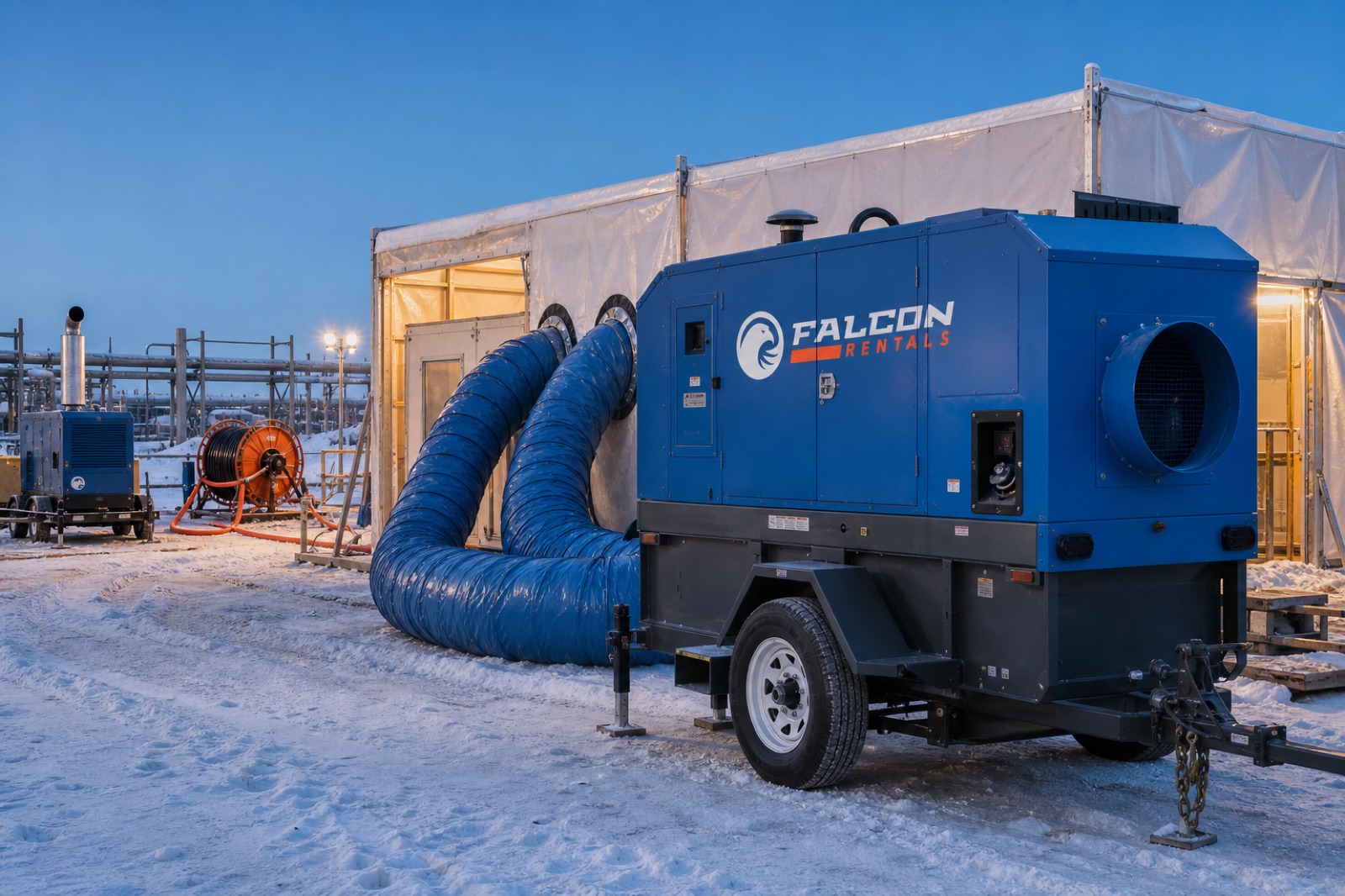
In most of Canada, jobsite heat is a comfort item. In Whitecourt it's the difference between a winter of billable work and four months of waiting for spring. Concrete has to cure, pipes can't freeze, ground has to thaw before it can be dug, and crews can't do fine work in mitts at -35°C.
The catch: "a heater" isn't one thing. Renting the wrong type wastes fuel at best and gets you sent off an oil and gas site at worst. Here's the field guide.
The four families of jobsite heat
Flameless heaters — the oil & gas workhorse
Flameless units generate heat without an open flame or exposed ignition source. On wellsites, plants, and any location with hot-work restrictions or potentially flammable vapours, they're not a preference — they're the requirement. Trailered flameless units like the ones in Falcon's flameless fleet push serious volumes of safe air and run unattended.
Rent one when: the site is oil & gas regulated, the safety plan restricts ignition sources, or you need big, unattended heat outdoors.
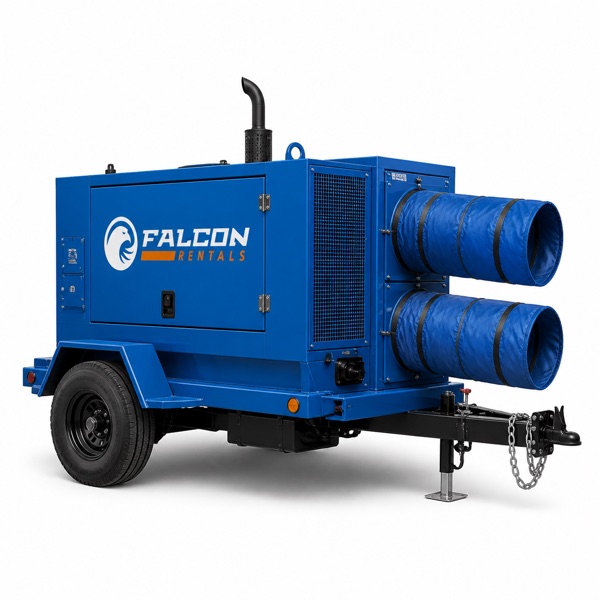
Diesel (indirect-fired) heaters — clean heat for enclosed spaces
Indirect-fired diesel heaters burn fuel in a sealed chamber and duct clean, dry, warm air inside — exhaust stays outside. That makes them the pick for hoarded structures, buildings under construction, and anywhere people are working in the heated space for hours.
Rent one when: you're heating an enclosed space with crews inside, drying a building out, or curing concrete under hoarding.
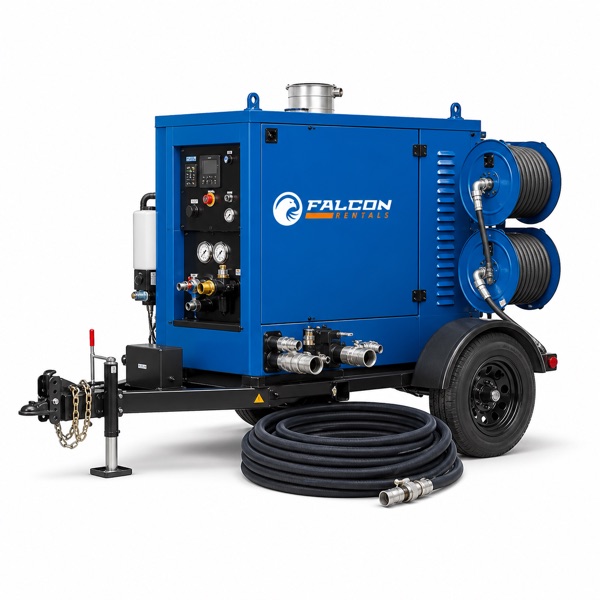
Ground-thaw units — dig in January
Hydronic ground-thaw heaters circulate heated glycol through hoses laid over frozen ground under insulated blankets. A day or two later, you're excavating in January like it's May. They're also the professional way to cure flatwork in deep cold.
Rent one when: you need to trench, pour, or repair below grade between November and March. Book early — these are the first machines to run out ahead of every cold snap.
Electric & NG/LP heaters — the utility players
Electric heaters are quiet, fumeless, and perfect for occupied or finished spaces with power available. Natural gas and propane units deliver cheap BTUs where gas is on site. Both fill the gaps the big iron doesn't.
Quick chooser
| Situation | Rent this |
|---|---|
| Oil & gas site, ignition restrictions | Flameless heater |
| Hoarded building, crews working inside | Indirect-fired diesel |
| Frozen ground to excavate or pour on | Hydronic ground thaw |
| Finished/occupied space, power on site | Electric |
| Gas available, budget BTUs | NG/LP |
Sizing: the two-minute conversation that saves you
Heater sizing is cubic feet × temperature rise, adjusted for how well the space is sealed — but in practice, don't do math alone. Measure the space, be honest about how leaky the hoarding is, and call the yard. Undersized heat means frozen pipes and cold-cracked concrete; oversized heat means paying to warm the sky. The yard specs this all winter, every winter.
The Whitecourt heat calendar
- September: smart contractors book heat for known winter jobs. Everything is available.
- October: first frosts; ground-thaw reservations start stacking.
- November–February: fleets run at capacity. Same-week heat is possible locally — same-week heat from the city usually isn't.
- March: thaw season — ground-thaw units stay busy right through breakup.
The pattern is simple: heat books out before the cold arrives, not after. If the job is scheduled, the heater should be too.